

Introduction
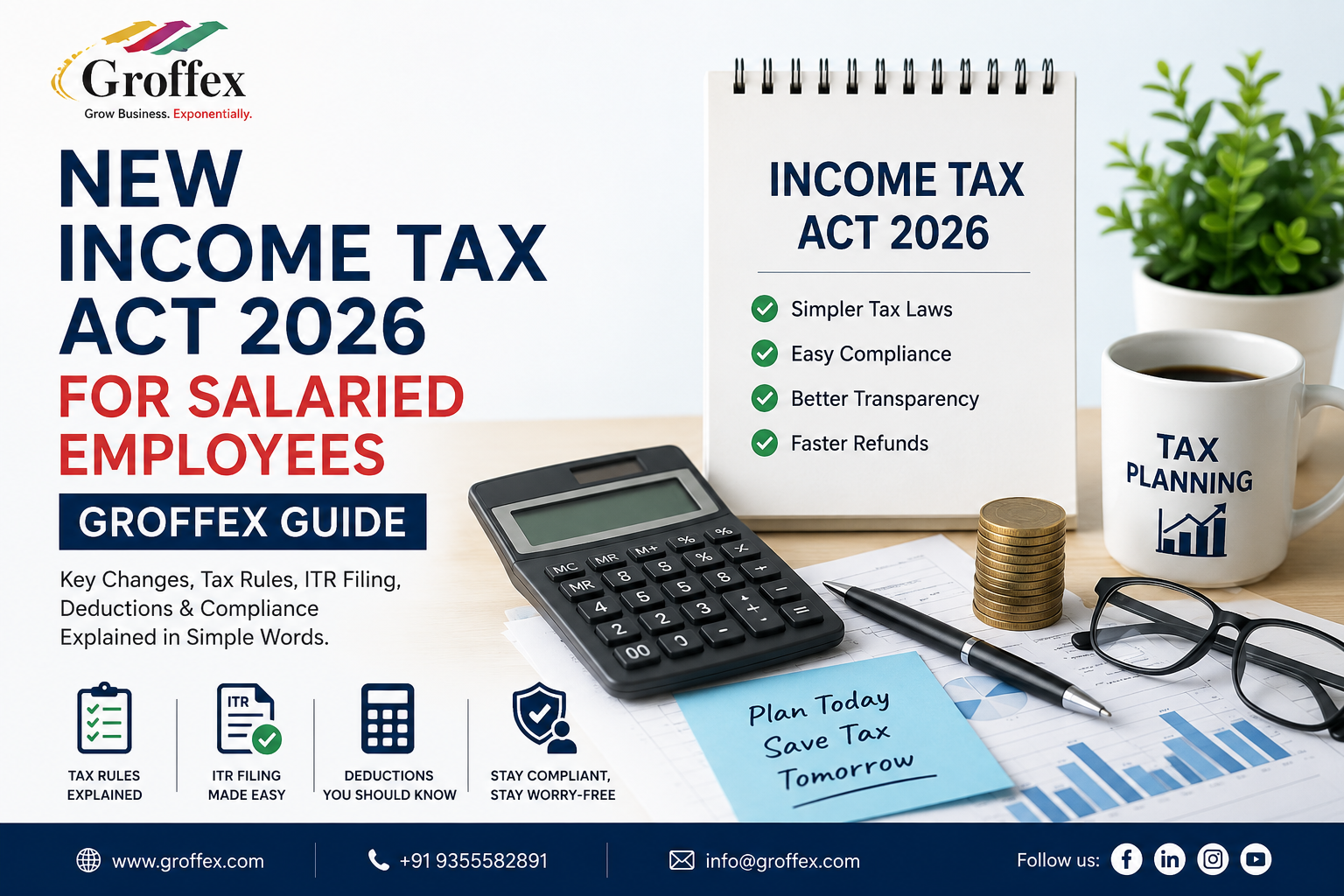
The Income Tax system in India has undergone several changes over the years. To make tax laws easier to understand and comply with, the government has introduced the New Income Tax Act 2026. For salaried employees, it is important to understand these changes so that tax filing becomes simple and error-free.
In this guide, Groffex explains the New Income Tax Act 2026 in easy language. Whether you are filing your Income Tax Return (ITR) for the first time or have been filing returns for years, this article will help you understand the key points.
What is the New Income Tax Act 2026?
The New Income Tax Act 2026 is an updated version of India’s income tax law. The main purpose of the new Act is to simplify tax provisions, reduce confusion, and make compliance easier for taxpayers.
The government aims to:
- Use simpler language in tax laws
- Reduce unnecessary complexity
- Improve digital tax compliance
- Make tax filing easier for individuals and businesses
- Increase transparency in tax administration
For salaried employees, the basic concept of paying income tax remains the same, but understanding the updated rules is important.
Who Should Read This Guide?
This guide is useful for:
- Salaried employees
- Government employees
- Private sector employees
- First-time taxpayers
- Employees receiving salary, bonuses, and allowances
- Individuals planning their taxes for FY 2026-27
Major Highlights of the New Income Tax Act 2026
1. Simpler Tax Provisions
Many sections have been rewritten in easier language. This helps taxpayers understand tax rules without needing extensive legal knowledge.
2. Better Digital Compliance
Tax filing, verification, notices, and refund processing are becoming more digital. Most tax-related work can now be completed online.
3. Improved Transparency
The government is focusing on reducing disputes and improving communication between taxpayers and the Income Tax Department.
4. Faster Processing
Income Tax Returns and refunds are expected to be processed more efficiently through technology-driven systems.
Income Tax Slabs for Salaried Employees
Tax rates may change based on government notifications and budget announcements. Before filing your return, always check the latest tax slab applicable for the financial year.
Employees can generally choose between:
Old Tax Regime
The old tax regime allows various deductions and exemptions, such as:
- House Rent Allowance (HRA)
- Section 80C investments
- Medical insurance under Section 80D
- Home loan benefits
- Education loan interest
New Tax Regime
The new tax regime offers lower tax rates but limits many deductions and exemptions.
Choosing the right regime depends on your salary structure and investments.
Important Documents Required for ITR Filing
Keep the following documents ready before filing your return:
Form 16
Provided by your employer and contains salary details and TDS information.
PAN Card
Required for filing Income Tax Returns.
Aadhaar Card
Should be linked with PAN.
Bank Account Details
Used for receiving tax refunds.
Investment Proofs
Documents related to tax-saving investments and deductions.
Form 26AS and AIS
Used to verify tax deducted, income reported, and financial transactions.
Common Salary Components You Should Understand
Basic Salary
The fixed portion of your salary.
House Rent Allowance (HRA)
May provide tax benefits if you live in rented accommodation.
Special Allowance
Additional amount paid by the employer.
Leave Travel Allowance (LTA)
Tax benefits may be available under specific conditions.
Performance Bonus
Taxable as part of your salary income.
How to File Income Tax Return in 2026 ?
Step 1: Collect Required Documents
Gather Form 16, PAN, Aadhaar, bank details, and investment documents.
Step 2: Verify Income Details
Match your income information with Form 26AS and AIS.
Step 3: Select the Correct Tax Regime
Compare the old and new tax regimes before filing.
Step 4: File Your Return
Submit your Income Tax Return through the Income Tax portal.
Step 5: Verify Your Return
Complete verification using Aadhaar OTP, net banking, or other available methods.
Common Mistakes Salaried Employees Should Avoid
Not Checking Form 26AS
Always verify that TDS deducted by your employer appears correctly.
Filing Under the Wrong Tax Regime
Compare both tax regimes before making a choice.
Ignoring Additional Income
Include interest income, freelance income, rental income, and other earnings if applicable.
Entering Incorrect Bank Details
Wrong bank information can delay refunds.
Missing Filing Deadlines
Late filing may result in penalties and interest.
Benefits of Filing ITR Even if Tax Liability is Low
Many employees think filing ITR is unnecessary if their income is low. However, filing returns offers several advantages:
- Easy loan approval
- Faster visa processing
- Proof of income
- Claiming tax refunds
- Maintaining a clean financial record
How to Check Income Tax Refund Status ?
After filing your return, you can track your refund status online.
Make sure:
- Your return is verified.
- Bank account details are correct.
- PAN and Aadhaar are linked.
Refunds are generally credited directly to the registered bank account.
Tax Planning Tips for Salaried Employees
Start Early
Avoid last-minute investments.
Maintain Proper Records
Keep salary slips, rent receipts, and investment proofs safely.
Review Salary Structure
Understand taxable and non-taxable components of your salary.
Use Available Deductions
If you choose the old tax regime, utilize eligible deductions properly.
File Before the Due Date
Timely filing helps avoid penalties and delays.
Conclusion
The New Income Tax Act 2026 aims to make tax compliance easier and more transparent for taxpayers. Salaried employees should understand the updated provisions, keep their documents ready, and file returns accurately and on time.
If you need professional assistance with Income Tax Return filing, tax planning, GST services, company registration, or compliance support, the experts at Groffex can help you manage the process smoothly and efficiently.
Frequently Asked Questions (FAQs)
Is the New Income Tax Act 2026 applicable to salaried employees?
Yes. Salaried employees must follow the applicable provisions while calculating taxes and filing returns.
Can I choose between the old and new tax regime?
Yes, eligible taxpayers can choose the regime based on their financial situation and tax planning requirements.
Is Form 16 mandatory for ITR filing?
Form 16 is very helpful for salaried employees because it contains salary and TDS details.
What happens if I file my ITR late?
Late filing may attract penalties, interest, and delays in processing.
Why should I check AIS and Form 26AS?
These documents help ensure that your income and tax information are correctly reported.